Accessibility Challenges and Solutions for Mobile-First Digital Platforms in India!




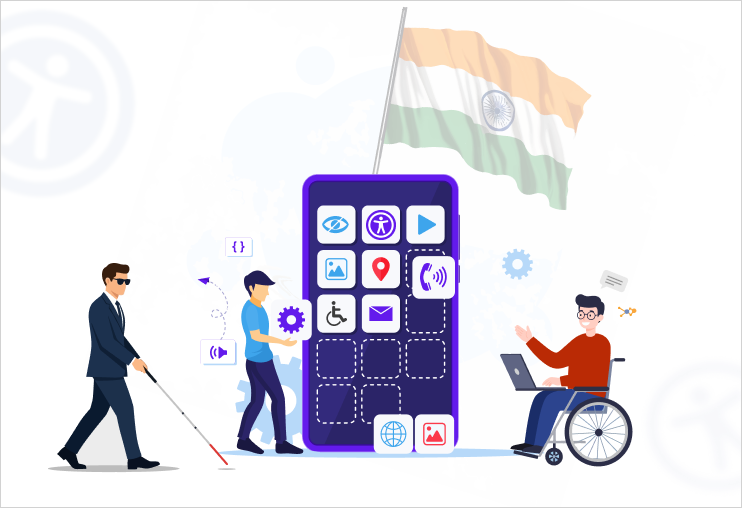
India’s digital ecosystem is overwhelmingly mobile-first, with millions of users accessing services primarily through smartphones rather than desktops. From banking and ecommerce to education and government services, mobile apps have become the gateway to digital inclusion.
However, this rapid mobile adoption has also exposed significant accessibility gaps, especially for people with disabilities, low literacy levels, and users on low-end devices. Despite progress, accessibility remains a critical concern – reports indicate that over 64% of Indian websites fail basic accessibility standards, highlighting systemic design issues that extend to mobile platforms as well.
This article examines the primary challenges and practical solutions for developing accessible, mobile-first platforms in India.
Understanding the mobile-first context in India
India’s mobile-first reality is shaped by:
- High smartphone penetration, especially Android devices.
- Reliance on low-cost or entry-level devices.
- Diverse linguistic and cultural backgrounds.
- A large population of over 63 million people with disabilities.
Unlike global markets, accessibility in India must go beyond compliance and address real-world usage conditions.
Key accessibility challenges
- Poor compliance with accessibility standards
Many mobile apps and responsive platforms do not fully align with WCAG standards.
Common issues include:
- Poor color contrast
- Missing alt text for images
- Lack of keyboard navigation
- Improper screen reader support
These foundational issues make apps unusable for users with visual, motor, or cognitive impairments.
- Language and localization barriers
India’s linguistic diversity poses a unique challenge:
- Most apps are English-first, limiting accessibility.
- Regional language accessibility support is inconsistent or poorly implemented.
- Screen readers often mispronounce Indian languages.
This creates barriers for both non-English speakers and users with visual impairments.
- Low literacy and cognitive load
A significant portion of users:
- Prefer audio or visual content over text.
- Struggle with complex navigation and dense interfaces.
Complicated UI patterns, long forms, and jargon-heavy content increase cognitive load, affecting usability for:
- First-time internet users
- Users with cognitive disabilities
- Device and infrastructure limitations
India’s mobile ecosystem includes:
- Low-end smartphones with limited processing power.
- Older Android versions with inconsistent accessibility features.
- Unstable internet connectivity in many regions.
These constraints impact:
- Performance of assistive technologies
- Compatibility of accessibility features
- Limited availability of assistive technologies
Assistive tools such as screen readers, speech-to-text software, and Braille displays are often expensive and not localized for Indian languages.
This limits adoption among disabled users, and they might need them the most.
- Gesture-heavy and complex mobile interfaces
Modern apps rely heavily on swipe gestures, multi-touch interactions, and hidden navigation patterns. These are often inaccessible for users with motor impairments or screen reader users, making navigation difficult.
- Lack of awareness among developers
A major root cause is:
- Limited accessibility training
- Accessibility is treated as an afterthought
- Focus on speed-to-market over inclusive design.
This results in products that are technically functional but not inclusive by design.
Solutions for building accessible mobile-first platforms
- Adopt accessibility-by-design approach
Instead of retrofitting accessibility:
- Integrate it from the design stage itself.
- Follow WCAG 2.1/2.2 guidelines.
- Conduct accessibility audits during development.
- Prioritize simple and inclusive UX
- Use clear navigation and consistent layouts.
- Avoid clutter and reduce cognitive load.
- Provide multiple ways to complete actions (not just gestures)
Example: Replace swipe-only actions with visible buttons.
- Strengthen language inclusivity
- Offer multilingual interfaces
- Ensure proper rendering of Indian scripts.
- Test with screen readers in regional languages.
Voice-based navigation and audio prompts can significantly improve accessibility.
- Optimize for low-end devices
- Design lightweight apps with minimal resource usage.
- Ensure compatibility with older OS versions.
- Support offline or low-bandwidth modes.
Accessibility should not depend on high-end devices.
- Improve assistive technology support
- Ensure compatibility with tools like TalkBack and VoiceOver.
- Use proper labels, roles, and ARIA attributes.
- Provide captions, transcripts, and audio descriptions.
- Design for touch accessibility
- Maintain adequate touch target size (at least 44×44 px)
- Avoid closely spaced interactive elements.
- Provide haptic or audio feedback.
- Conduct real-user testing
- Test with users with disabilities
- Include diverse demographics (age, literacy, language)
- Combine automated tools with manual testing.
- Build awareness and training
- Train developers and designers in accessibility best practices
- Include accessibility KPIs in product development.
- Encourage cross-functional collaboration
The way forward: Inclusive mobile innovation
India’s push toward initiatives like Digital India reflects a commitment to inclusive digital growth. However, true inclusion requires:
- Stronger enforcement of accessibility standards
- Industry-wide accountability
- Continuous innovation in assistive technologies
Accessibility is not just a compliance requirement; it is a business opportunity and social responsibility. Inclusive mobile platforms can unlock access for millions of underserved users, driving both impact and growth.
Also read: UI Motion and accessibility for an inclusive digital experience
Wrapping up
As India continues its mobile-first journey, accessibility must become a core pillar of digital design. Addressing challenges like language diversity, device limitations, and usability barriers will ensure that digital platforms are truly inclusive.
Designing for accessibility is ultimately about designing for real people in real contexts – and in India, that context is diverse, dynamic, and mobile-first.
Because in mobile-first India, accessibility isn’t optional – it’s essential!
Unlock the full potential of your mobile-first digital platforms with Skynet Technologies. Our expertise in digital accessibility helps businesses in India overcome common challenges, implement practical solutions, and create a seamless experience for every user. From improving navigation and readability to compatibility with assistive technologies, we provide accessibility widget to improve its inclusivity. Reach out us to enhance usability, broaden audience reach, and demonstrate a strong commitment to accessibility and digital equity.
If you’re building or managing a mobile platform, now is the time to act. Audit mobile website, app; identify accessibility gaps, and start designing inclusively today. Reach out to hello@skynetindia.info discuss this further.